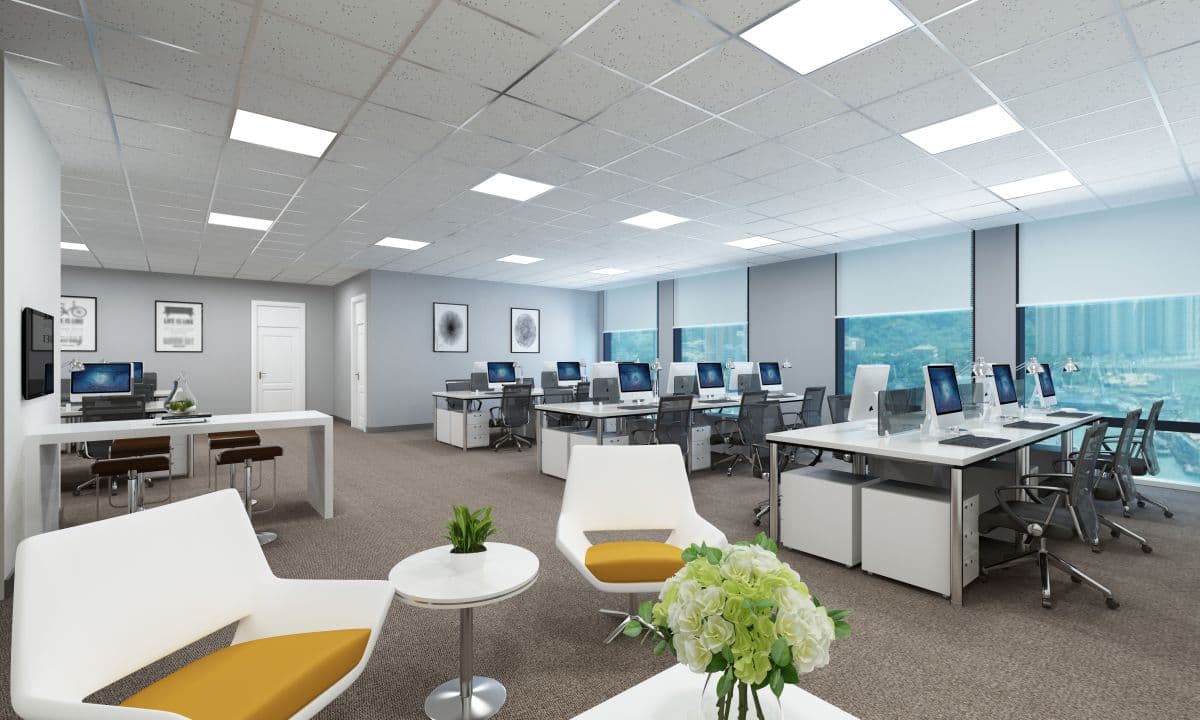
Modern and correct lighting in the workplace is becoming increasingly important. After all, it has an impact on many factors in working life, such as healthy and motivated employees and a safe working environment.
Normative principles are the basis for planning and installing lighting systems in the workplace. A large number of variables must be taken into account when realising such projects. The most important of these is brightness or illuminance, which is specified as at least 500 lux. Dimmable solutions that allow the lighting to be adjusted to different external conditions and personal preferences are ideal. Flicker-free lighting is essential, as even imperceptible flickering can have a detrimental effect on concentration and, not least, health and well-being.
The colour temperature («light colour») and the colour rendering index are also decisive. Neutral white light with values between 3500 and 5000K is ideal in working environments. This (colour) spectrum is similar to daylight and is therefore considered ideal for concentrated work at a desk. In order to also achieve a natural perception of colours by the human eye, the colour rendering index (CRI) should have a value of over 80.
Increasing attention is being paid to glare-free lighting in the working environment. The standardised uniform glare rating (UGR) must be below a value of 19 at VDU workstations in offices in order to meet all legal requirements with regard to direct glare. Architectural conditions, surfaces and the room lighting concept - direct or indirect, centralised or decentralised - all have an influence here.
The integration of this modern generation of lamps into semi-automatic control systems, such as motion and presence detectors or complex building automation systems (e.g. KNX or DALI systems), also ensures greater convenience and enormous potential for energy savings.
When planning lighting solutions in new buildings, it is important to take all these factors into account. Individual and optimum lighting conditions can thus be realised at every workplace in any environment.
Existing, conventional lighting systems can also be converted to LED-based solutions with all the advantages described above. Both the installation of LED panels in suspended ceilings and the conversion of designer free-standing office luminaires and integration into building automation systems allow the environment to appear in a completely new light. With a manageable investment, low labour costs, long service life of the light sources and enormous energy savings, amortisation usually takes place within a few years, depending on the intensity of use.
Published in the eco2friendly magazine autumn/winter 2021